


 Home
Home
Dakhla Oasis, located 350 km from the Nile River between Farafra and Kharga oases, spans 2,000 km² across Egypt's Western Desert. Stretching 80 km from east to west, this UNESCO Tentative List site (since 2003) represents an extraordinary cultural landscape shaped by indigenous peoples since Pharaonic times. With a population of 75,000 recorded in 2002, Dakhla serves as a living laboratory demonstrating human ingenuity and adaptation, where civilizations have not merely survived but created thriving communities that have endured for millennia in this desert sanctuary.
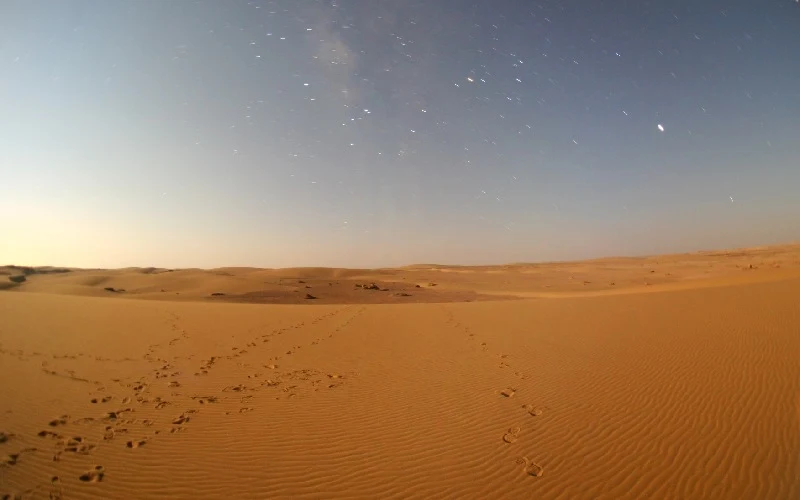
Dakhla Oasis is situated in Egypt's Western Desert, about 350 km from the Nile River. It stretches approximately 80 km from east to west and 25 km from north to south, covering a total area of 2,000 km².
The Natural Setting of Dakhla Oasis
Within Egypt's vast Western Desert lies a geographical marvel that defies the harsh realities of its surroundings, where ancient forces have sculpted a sanctuary capable of sustaining life for millennia.
Geographic location and size
The New Valley Governorate harbors this desert jewel, precisely positioned 175 km from the Mediterranean Sea and forming a critical link between Farafra oasis and Kharga oasis. The oasis depression presents elevations fluctuating between sea level and 100 meters above, creating a natural collecting basin where precious water resources can gather and persist.
This topographical feature proved instrumental throughout history, particularly when Darb al-Tawil connected this remote outpost with the Nile Valley. Ancient merchants recognized Dakhla's pivotal role along caravan networks that stretched between Egyptian oases and extended trading routes eastward toward Libya.
Desert climate and water sources
The Köppen classification identifies Dakhla's climate as BWh, characterized by extreme conditions. Two seasons dominate: a relatively temperate winter spanning November through March, followed by formidable summer months from April to October. Summer daytime temperatures soar beyond 40°C before plummeting to 10°C during nighttime hours.
The United Nations Environment Program classifies the surrounding landscape as hyper-arid, receiving essentially zero annual precipitation. Yet life persists through an intricate network including natural springs, nearly 900 wells, and therapeutic hot springs such as 'Bir Talata' and 'Bir El Gabal'.
The Nubian Aquifer and fossil water
Beneath the surface lies the Nubian Sandstone Aquifer System (NSAS), spanning an astounding 2.35 million km² across Egypt, Libya, Sudan, and Chad. This water source contains "fossil water"—ancient precipitation that accumulated when the Sahara enjoyed different climatic conditions. Research indicates the aquifer's last major recharge occurred between 4,000 and 8,000 years ago, meaning every drop represents a finite, irreplaceable resource.
Dakhla benefits from the aquifer's relatively shallow depth—typically less than 100 meters below ground, historically establishing the oasis as among Egypt's most productive agricultural centers. Current extraction rates approach 700 million cubic meters annually, creating concerning "dry pockets" within the system, potentially threatening these ancient desert communities' long-term viability.
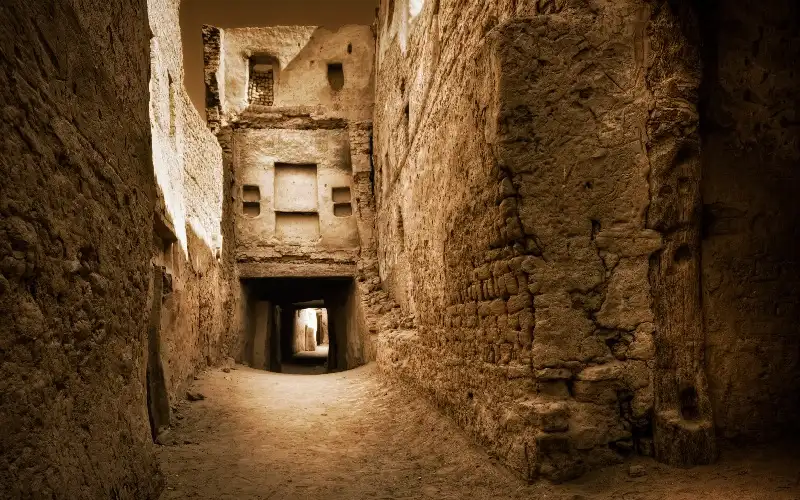
The primary water source for Dakhla Oasis is the Nubian Sandstone Aquifer System (NSAS), one of the world's largest groundwater systems. This aquifer provides fossil water that accumulated during previous wet climatic periods.
Early Human Presence and Prehistoric Life
Archaeological excavations across Dakhla have unveiled a captivating chronicle of human presence stretching back millennia.
Nomadic tribes during the Pleistocene
The earliest chapter began during the Pleistocene epoch, when nomadic tribes first discovered sanctuary within this desert depression. The Sahara of that distant era was a landscape dotted with lakes and verdant marshes. These pioneering inhabitants moved with the seasons, their temporary encampments establishing the first human footprint.
Holocene settlement patterns
Approximately 12,000 years ago, the Holocene period witnessed a shift as nomadic hunter-gatherers began creating more enduring communities. Three cultural chapters emerged: the Masara/Epipalaeolithic people (10,100-8450 cal BP), the Neolithic Bashendi culture with two distinct phases (A: 8370-7600 cal BP and B: 7350-5750 cal BP), and the Sheik Muftah culture.
The Masara C settlements (9900-9500 cal BP) provide evidence of humanity's growing commitment to permanent residence, featuring stone structures, storage systems, and diverse toolkits. During the Bashendi A period, communities expanded throughout southeastern Dakhleh. Archaeological surveys revealed an astonishing collection of 200 slab structures. Around 6,000 years ago, the entire Sahara entered its current hyperarid phase, forcing dramatic adaptations.
Sheik Muftah culture and early tools
Between 3200-2000 BCE, the distinctive Sheik Muftah culture emerged as masters of desert survival. These nomadic peoples built their economy around cattle and goat herding, supplementing livestock with gazelle hunting. Their archaeological sites reveal a deliberately minimal approach to permanent construction—featuring only essential fireplaces and storage pits.
Their pottery consisted primarily of simple bowl-shaped vessels with occasional decorative elements. They created mysterious small stone rings known as "Clayton rings"—artifacts whose purpose continues to puzzle researchers. This indigenous culture maintained its distinct identity even as Egyptian civilization established presence during the Early Dynastic and Old Kingdom periods.
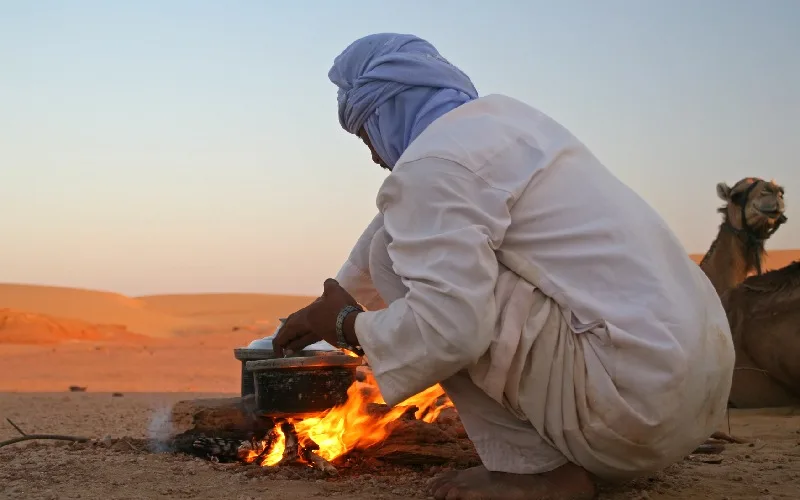
The Sheik Muftah culture (3200-2000 BCE) was a nomadic society that mastered desert survival through cattle and goat herding. They created pottery, stone tools, and mysterious "Clayton rings," maintaining their distinct identity even alongside early Egyptian dynastic presence.
Customize Your Dream Vacation!
Get in touch with our local experts for an unforgettable journey.
Plan Your TripDakhla Oasis Through Ancient Civilizations
Layers of civilization stack beneath Dakhla's sands like pages in history's manuscript, each culture adding its own chapter.
Pharaonic administration and clay tablets
The Old Kingdom (circa 2686-2181 BCE) marked when formal Egyptian authority extended into this remote desert haven. An extraordinary discovery changed our understanding of ancient Egyptian record-keeping: approximately five hundred clay tablets bearing hieratic script found within the governor's palace at Ayn Asil (Balat).
These remarkable artifacts from the late 6th Dynasty preserved inventories, accounts, name-lists, and nearly fifty letters. Clay tablets were exceptionally rare in Egyptian archaeology. Dakhla's remote location placed it far from papyrus production centers, forcing creative solutions for record-keeping.
Roman influence and Deir el-Hagar temple
Roman occupation transformed Dakhla into a bustling agricultural powerhouse. Roman engineers established sophisticated agricultural networks throughout the oasis. At Trimithis (today's Amheida), Romans orchestrated agricultural enterprises producing olive oil, dates, figs, and jujubes for export to the Nile Valley.
Deir el-Hagar ("Monastery of Stone") presents the most complete Roman monument the oasis preserved. Emperor Nero initiated construction (54-68 CE), though subsequent rulers each contributed additions. The temple's spiritual significance centered on the Theban triad—Amun-Ra, Mut, and Khonsu—while also honoring Seth, the region's principal deity.
Islamic town of Qasr ad-Dakhla
Medieval Islamic builders constructed their fortified settlement of Qasr ad-Dakhla atop earlier Roman fort foundations during the 12th century CE. The town's most striking feature, a distinctive 21-meter-high minaret dating to 924 CE, pierces the desert sky.
Many structures incorporate stone blocks bearing hieroglyphic inscriptions salvaged from the ancient Thoth temple at nearby Amheida. The settlement's defensive design reveals careful urban planning—streets were divided into distinct quarters protected by gates that residents could secure at night.
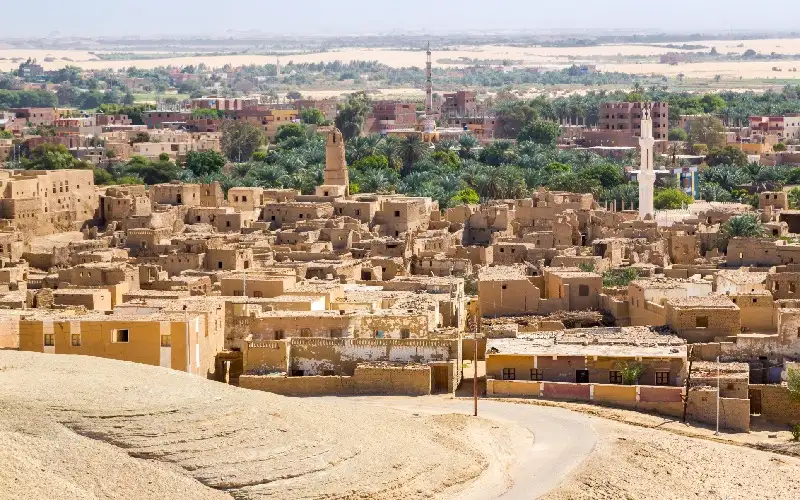
Several ancient civilizations have influenced Dakhla Oasis, including the Pharaonic Egyptians, Romans, and Islamic cultures. Evidence of their presence can be seen in archeological sites, temples, and fortified towns throughout the oasis.
Modern Discoveries and Ongoing Research
Western exploration of Dakhla unfolded remarkably late compared to Egypt's more famous archaeological destinations.
19th and 20th century explorers
Sir Archibald Edmonstone became the first European to reach the oasis in 1819, narrowly defeating French competitor Bernardino Drovetti by ten days. Friedrich Gerhard Rohlfs conducted explorations between 1873-1874. Serious scholarly documentation began in 1908 when Egyptologist Herbert Winlock cataloged the oasis monuments.
Scientific awakening arrived during the 1950s under Ahmed Fakhry's leadership, setting the stage for Institut Français d'Archéologie Orientale expeditions in the late 1970s.
Dakhleh Oasis Project and archeological sites
A watershed moment arrived in 1978 with the establishment of the Dakhleh Oasis Project (DOP), a collaborative venture between the Royal Ontario Museum and the Society for the Study of Egyptian Antiquities. This ambitious multidisciplinary research brings together diverse scientific expertise. Each year, over 100 scientists converge on the oasis.
The project has catalogued over 600 archaeological sites, unearthed what may be the oldest books ever discovered (circa 360 AD), and traced evidence of human presence stretching back 500,000 years.
Recent tomb discoveries and petroglyphs
August 2017 marked another milestone when archaeologists excavated five mud-brick tombs at Bir esh-Shaghala from approximately 2,000 years past. Within these burial chambers lay gold-gilded masks, pottery vessels, and hieroglyphic inscriptions.
The Petroglyph Unit has documented over 1,300 panels scattered throughout the region, spanning from prehistoric times through the Islamic era. These stone canvases preserve artistic expressions of countless generations.
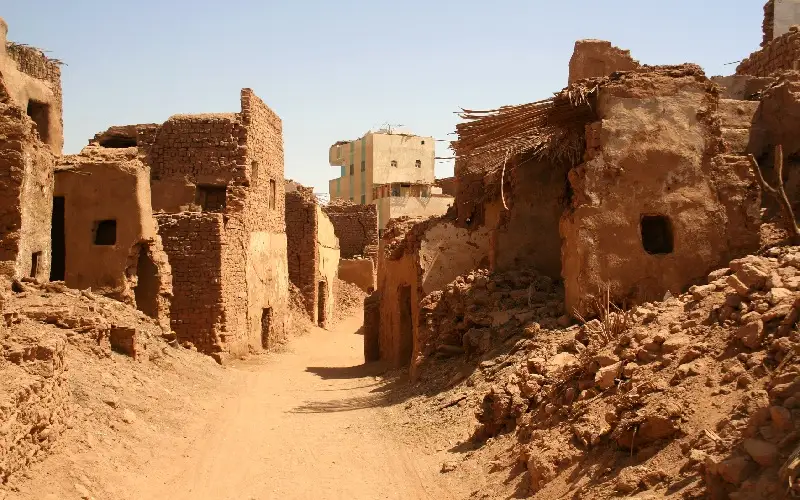
Recent discoveries in Dakhla Oasis include five mud-brick tombs at Bir esh-Shaghala dating back approximately 2,000 years, containing gold-gilded masks and hieroglyphic writings. Additionally, researchers have mapped over 1,300 rock art panels featuring imagery from prehistoric to Islamic periods.
Dakhla oasis reveals perhaps the most complete record of human determination preserved in a single location. This 80-km stretch of Egypt's Western Desert tells a story that defies simple categorization—not merely a place where people survived, but where cultures repeatedly chose to flourish despite nature's harshest constraints.
The archaeological evidence paints a portrait of remarkable continuity. Researchers can trace an unbroken chain of human ingenuity spanning half a million years: nomadic adaptations giving way to settled communities, indigenous cultures maintaining identity alongside imperial powers, and agricultural innovations supporting trade networks across continents.
Dakhla has served as both sanctuary and crossroads throughout history—remote enough to preserve ancient ways, yet connected enough to participate in Egyptian civilization's grand sweep. The Dakhleh Oasis Project continues unearthing evidence that reshapes our understanding of desert societies.
Today, as modern communities still draw life from the same aquifer system that sustained their ancestors, Dakhla stands as a profound reminder of human resourcefulness. This remarkable depression holds not just remnants of past civilizations, but the ongoing story of people who made the impossible possible—a testament to the enduring human spirit where adversity sparked creativity and scarcity fostered ingenuity.
Dakhla has a hot desert climate with temperate winters (November-March) and extreme summers (April-October) reaching over 40°C during the day, dropping to 10°C at night. The region receives virtually zero annual precipitation and is classified as hyper-arid.
The Dakhleh Oasis Project is a multidisciplinary research effort initiated in 1978 by the Royal Ontario Museum and the Society for the Study of Egyptian Antiquities. It involves over 100 scientists annually studying the interaction between environmental changes and human activity in the oasis.
Approximately 500 clay tablets with hieratic script from the late 6th Dynasty were discovered at Ayn Asil. These rare tablets contain inventories, accounts, and letters, providing insights into ancient Egyptian administration. They represent a unique adaptation since Dakhla's remote location made papyrus difficult to obtain.
Deir el-Hagar is the most complete Roman monument in Dakhla. Built under Emperor Nero (54-68 CE) and expanded by later rulers, this sandstone temple was dedicated to the Theban triad—Amun-Ra, Mut, and Khonsu—and Seth, the region's principal deity.
Qasr ad-Dakhla is a fortified Islamic settlement built on Roman foundations during the 12th century CE. It features a distinctive 21-meter-high minaret from 924 CE and defensive architecture with many structures incorporating stone blocks with hieroglyphic inscriptions.
Dakhla was added to UNESCO's Tentative List in 2003 for its exceptional natural beauty and historical significance. It represents an outstanding cultural landscape shaped by continuous human-environment interactions since Pharaonic times.
Archaeological evidence shows human presence dating back approximately 500,000 years, with continuous habitation from Pleistocene nomadic tribes through Pharaonic, Roman, and Islamic periods to today's population of around 75,000.

As a UK passport holder, you'll discover that obtaining an Egyptian visa is a straightforward process, with multiple options designed to accommodate various travel purposes and durations.

El Fayoum, located one hour south of Cairo, is considered one of Egypt's most peaceful places and one of the most greenish oases in Egypt's desert

Bahariya is one of the more appealing of the desert circuit oasis, and it's also the easiest to access, being just 365 kilometers from Cairo.

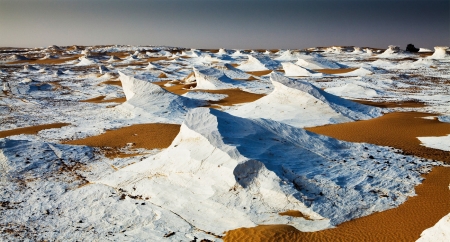
Farafra Oasis showcases the White Desert's dramatic chalk formations, therapeutic hot springs, and volcanic Black Desert. This remote Egyptian oasis, 627 km from Cairo, offers authentic Bedouin culture and stunning desert landscapes.

Dakhla Oasis spans 2,000 km² in Egypt's Western Desert, 350 km from the Nile. This UNESCO-listed site showcases Pharaonic heritage and traditional communities with 75,000 residents.

Kharga Oasis, Egypt's largest desert oasis, spans 160 km west of the Nile. This UNESCO nominee features the Temple of Hibis and preserves ancient caravan route heritage as the most modernized western oasis with 87,482 residents.


Siwa Oasis is a lush desert oasis below sea level, known for its natural springs, palm groves, ancient oracle, and preserved Berber culture.

Egypt’s Black Desert is a striking natural wonder marked by black volcanic hills, basalt formations, and surreal landscapes shaped by ancient volcanic activity and millions of years of erosion.

The White Desert is a protected natural area in Egypt near Farafra Oasis, known for its white limestone formations created by erosion over millions of years.

Crystal Mountain Egypt is a breathtaking natural landmark located between Bahariya and Farafra oases in the White Desert. Known as the “Jewel of the Desert,” it features clusters of sparkling quartz crystals formed over millions of years, making it one of the rarest geological formations in the world.
